
Buy an item
A guide to Unity Shop testing and secure purchasing via Idempotency Keys
1. Preparation & Setup
To begin testing, please complete the following steps:
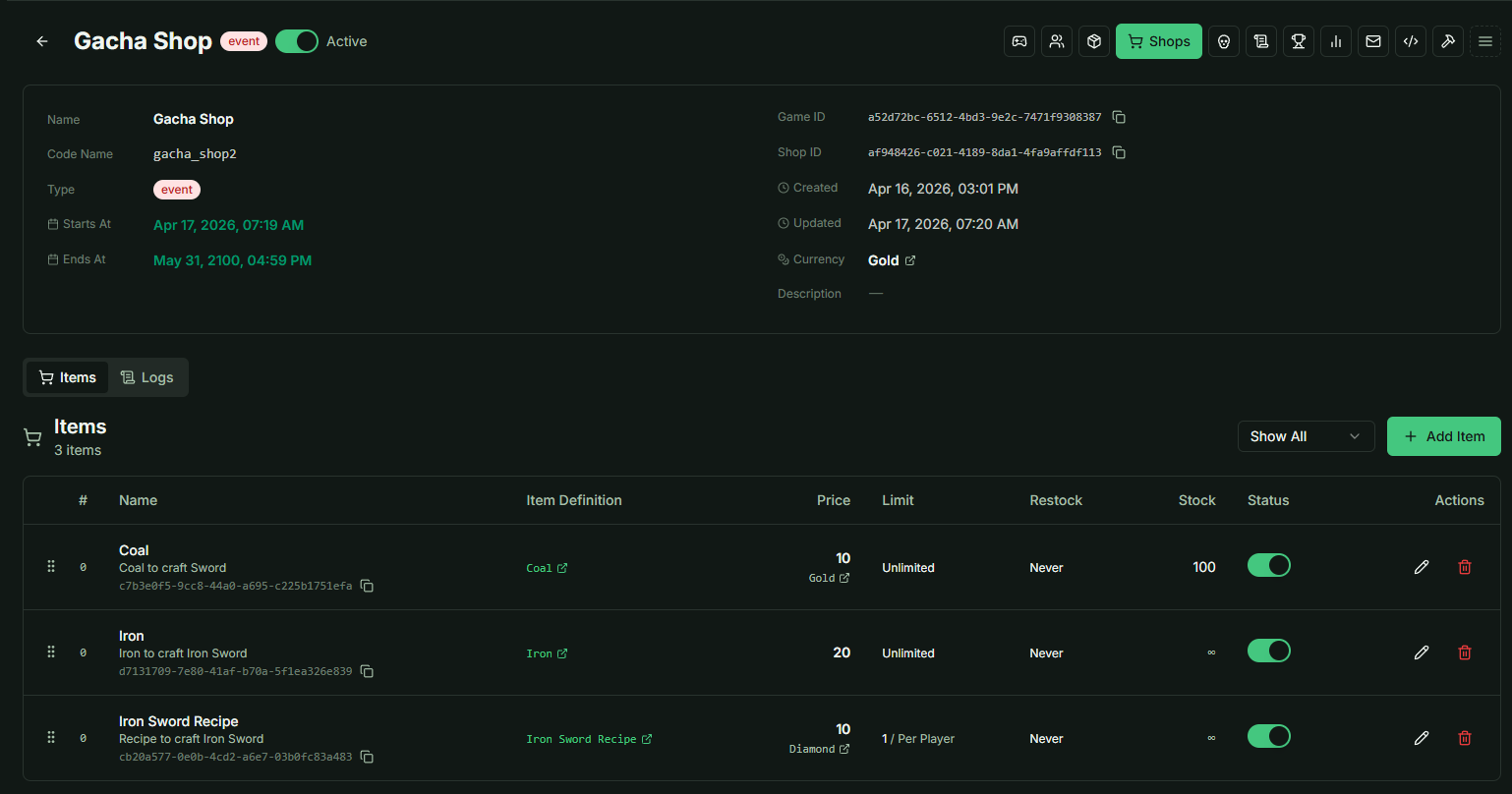
- Configure the Shop: Set up a shop in the Web UI to match the configuration shown in the reference image (wi)
- Fund the Test Account: Ensure your test account has sufficient currency. You can send the required items/currency via the Mailbox system or any other administrative tool available to you.
2. Unity Client Integration
You can interact with the shop system through the Unity Inspector:
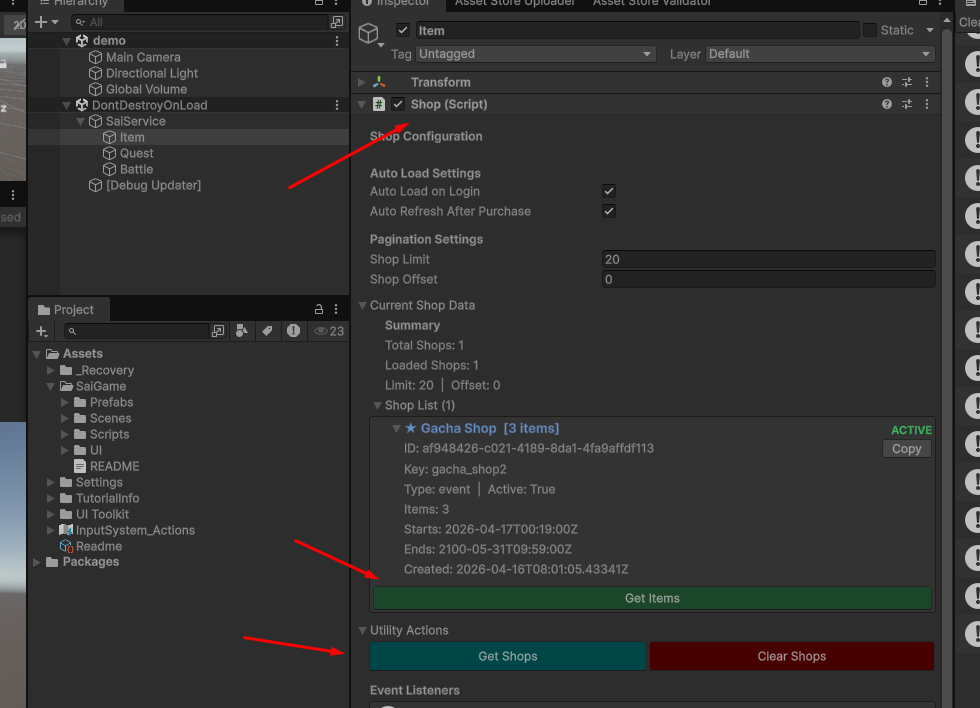
- Locating the Shop Class: Navigate to the Item object in the hierarchy. You will find the Shop class as a child component.
- Fetching Shops: Click the Get Shops button. This will retrieve and display a list of all currently Active shops.
- Loading Items: Within each individual shop entry, click Get Items to load the list of active products available for that specific shop.
3. Performing a Purchase
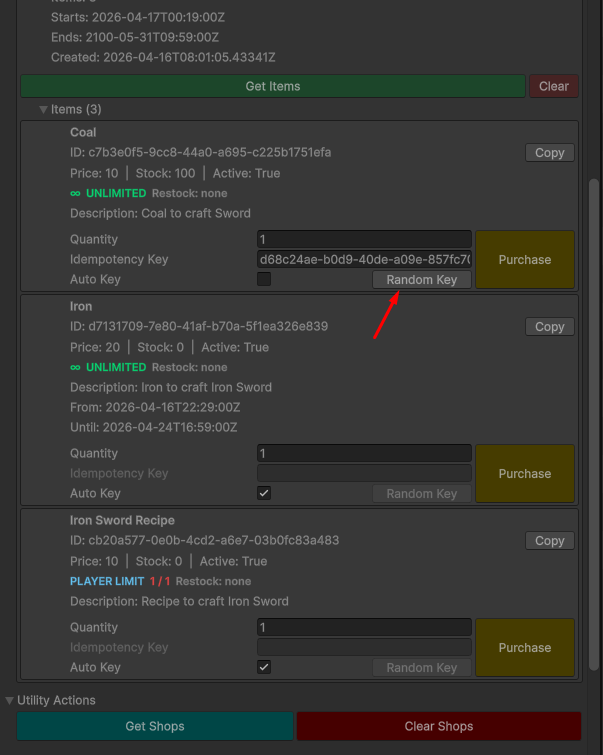
When you trigger a purchase, you must manage the Idempotency Key. You can either enable the Auto Idempotency Key feature or enter one manually.
What is an Idempotency Key?
An Idempotency Key is a unique string used to ensure that a purchase request is processed exactly once. It is a critical safeguard against accidental duplicate transactions.
- How it works: If a network timeout occurs or the player accidentally double-clicks the "Buy" button, the client might send the same request twice.
- The Server's Role: By providing an Idempotency Key, the server recognizes the second request as a duplicate of the first. Instead of charging the player twice, the server simply returns the result of the original successful transaction.
- Usage:
- Auto: The system generates a unique UUID for every new transaction attempt.
- Manual: Useful for specific debugging scenarios where you want to test how the server handles a specific key value.
Note: Always use unique keys for different purchase intents. Reusing a key from a successful previous purchase for a new item will result in the server ignoring the new request.